What is the difference between the Acropolis and the Parthenon?
Quick Answer
The Acropolis is the entire sacred hill and ancient citadel of Athens, containing multiple monuments, temples, and structures. The Parthenon is one specific temple located on top of the Acropolis, dedicated to the goddess Athena Parthenos. Think of it this way: the Acropolis is the neighbourhood, and the Parthenon is the most famous building in it.
Both terms are often used interchangeably by visitors, but understanding the distinction helps you appreciate the full scope of what you are visiting -- there are at least five significant ancient structures on the hill, not just one.
What is the Acropolis?
The Acropolis (literally 'high city' in Greek) is a flat-topped limestone rock rising 156 metres above Athens, used as a sacred and defensive site since at least the 13th century BC. Today the Acropolis site includes the Propylaea (the grand entrance gateway), the Temple of Athena Nike, the Erechtheion with its famous Caryatid porch, the Parthenon, and the remains of several other structures. The entire complex is enclosed within one ticket area and takes 1.5 to 2.5 hours to explore properly.
What is the Parthenon?
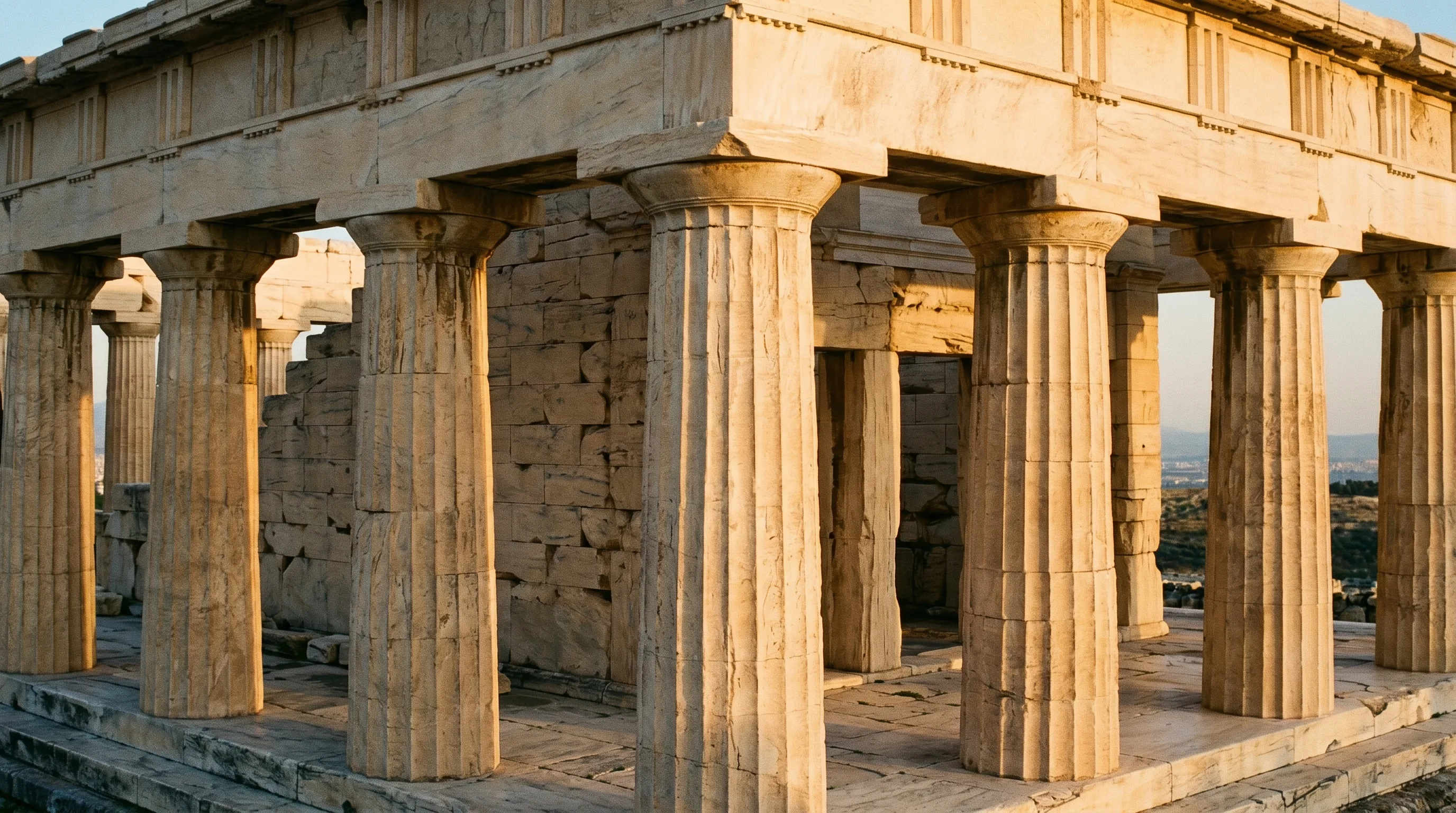
The Parthenon is a Doric temple built between 447 and 432 BC under the direction of Pericles, designed by the architects Ictinus and Callicrates with sculptural program overseen by Pheidias. It is the largest and most architecturally refined temple on the Acropolis, with 46 outer columns and originally housing a 12-metre gold and ivory statue of Athena. The Parthenon stood intact for nearly a thousand years before suffering major damage in 1687 when Venetian forces shelled it during a siege. It remains the defining symbol of ancient Greek civilisation and classical architecture.
Other Monuments on the Acropolis Hill
Beyond the Parthenon, the Erechtheion (421-406 BC) is remarkable for its Caryatid porch -- six female figures serving as supporting columns. The Temple of Athena Nike, the smallest structure on the hill, was built around 420 BC and is the earliest fully Ionic temple on the Acropolis. The Propylaea, the monumental gateway built from 437-432 BC, is itself an architectural masterpiece that visitors pass through to enter the hill. Each of these is worth pausing at -- many visitors rush past them to reach the Parthenon, but the full site rewards a slower pace.
How to See Both
You do not need separate tickets -- one Acropolis ticket (EUR20, or EUR30 as part of the combined ticket) covers the entire hill including the Parthenon. They are not two separate sites to plan around. All guided Acropolis tours cover all the major monuments including the Parthenon, and the standard visit route naturally takes you through the Propylaea and past the other temples before arriving at the Parthenon itself.
Skip the queue at the Acropolis
Book skip-the-line tickets or guided tours — instant confirmation, free cancellation.
Check availability & prices →