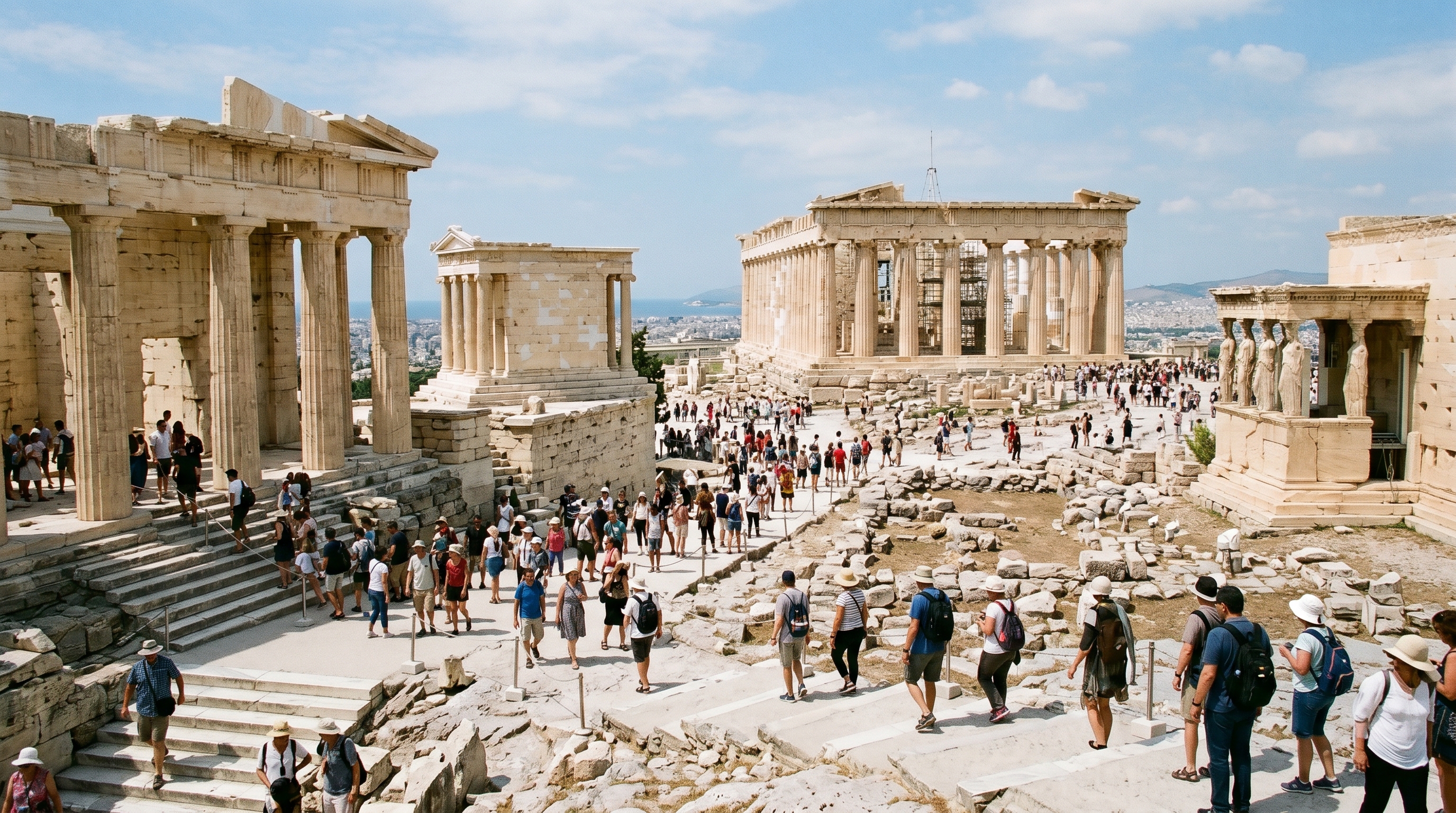
TL;DR: This Acropolis visitor guide covers everything you need for a smooth trip: opening hours (8am–8pm in summer, 8am–5pm in winter), how to get there by Metro or bus, what to see inside, how long to allow, dress code tips, photography rules, accessibility options, and the best insider tricks to make the most of your visit.
Introduction
Every year, millions of people climb the same limestone hill that Athenians have stood on for over 2,500 years. The Acropolis is one of the most visited ancient sites in the world, and for good reason. The views alone are worth the trip.
But a visit to the Acropolis without preparation can mean long queues, uncomfortable shoes, and missing the best spots entirely. This guide gives you a practical, honest breakdown of visiting the Acropolis in Athens so you know exactly what to expect before you arrive.
Whether you have two hours or a full morning, you’ll leave this page ready to plan a visit you’ll actually remember.
How Do You Get to the Acropolis?
The easiest way to reach the Acropolis is by Metro. Take Metro Line 2 (red line) to Acropolis station. From there, it’s about a 5-minute walk south along Dionysiou Areopagitou street to the main entrance.
The address is Dionysiou Areopagitou, Athens 117 42. The street runs along the south slope of the hill and is pedestrianised, so it’s a pleasant walk even in summer.
Getting There by Bus
If you’re coming from central Athens, buses 230 and 057 stop near the site. From Syntagma Square, the walk takes about 20 minutes through the Plaka neighbourhood, which is worth doing at least once for the atmosphere.
Arriving by Taxi or Rideshare
Taxis and Beat (the local rideshare app) can drop you on Dionysiou Areopagitou. Traffic in the area is light since the street is mostly pedestrian. It’s a reliable option in the early morning when the Metro is less frequent.
What Are the Acropolis Opening Hours?
The Acropolis is open daily, and the hours change by season.
- Summer (April to October): 8am to 8pm
- Winter (November to March): 8am to 5pm
- Last entry is 30 minutes before closing
The site is closed on a small number of public holidays each year, including January 1, March 25, Easter Sunday, May 1, and December 25–26. On other national holidays, it may open late or offer free entry, so check the Greek Ministry of Culture website before you go.
The main entrance is on the south side of the hill, accessed from Dionysiou Areopagitou. There is also a less-used entrance on the west side via the Beule Gate, which some guided tours use.
What Will You See at the Acropolis?
Visiting the Acropolis means exploring several ancient monuments spread across the rocky summit. Each one has its own story. Here’s a quick guide to the main highlights.
The Propylaea
The Propylaea is the monumental gateway you pass through to reach the hilltop. Built between 437 and 432 BC, it sets the tone for everything that follows. The scale of the columns is immediately impressive, even compared to other Greek monuments.
The Parthenon
The Parthenon (view on Google Maps) is the iconic temple at the heart of the Acropolis, dedicated to Athena Parthenos, the patron goddess of Athens. Construction began in 447 BC and was completed in 438 BC. Much of the sculptural decoration was removed by Lord Elgin in the early 1800s and remains in the British Museum in London, a source of ongoing dispute between Greece and the UK.
Even without the original friezes, the Parthenon is extraordinary. The columns taper slightly inward, an optical trick to make the building look perfectly straight from a distance.
The Erechtheion and the Caryatids
On the north side of the summit stands the Erechtheion, a temple dedicated to both Athena and Poseidon. Its south porch is supported by six draped female figures called Caryatids. The originals are now in the Acropolis Museum nearby (one is in the British Museum). What you see on the site are high-quality replicas.
Temple of Athena Nike
Near the entrance, the small but beautifully preserved Temple of Athena Nike celebrates victories in battle. It was built around 420 BC and is one of the oldest surviving examples of Ionic architecture in Athens.
Theater of Dionysus
At the base of the south slope, the Theatre of Dionysus (Google Maps) is considered the birthplace of Western theatre. Plays by Sophocles, Euripides, and Aristophanes were first performed here in the 5th century BC. The stone seating holds over 17,000 spectators.
Odeon of Herodes Atticus
Further along the south slope, the Odeon of Herodes Atticus (Google Maps) is a Roman-era theatre built in 161 AD. It’s still used today for concerts and performances during the Athens Epidaurus Festival in summer. Even if you don’t attend a show, the views from above are striking.
How Long Does a Visit to the Acropolis Take?
A self-guided visit takes around 90 minutes if you walk through the main monuments at a steady pace with photo stops. Allow 2.5 to 3 hours if you’re on a guided tour or want to sit and take it all in at the Theater of Dionysus and the Odeon.
If you’re combining the Acropolis with the Acropolis Museum (which is highly recommended), set aside a full morning or afternoon for both. The museum sits directly below the hill and holds the original Caryatids and many of the sculptures removed from the site.
What Should You Wear to the Acropolis?
Comfortable, flat-soled shoes are essential. The ancient marble paths are uneven, sloped, and can be slippery, especially after rain. Heels of any kind are strongly discouraged and can be dangerous.
In summer, wear light, breathable clothing and bring a wide-brimmed hat. The hilltop offers almost no shade. Temperatures on the exposed summit can feel significantly hotter than street level.
There’s no dress code for shoulders or legs, though modest clothing is always respectful at archaeological sites.
Photography at the Acropolis: What’s Allowed?
Photography is free and unrestricted for personal use throughout the site. You can bring a camera, a tripod for ground-level shots, and photograph anything you like.
Drones are not permitted anywhere over the Acropolis or the surrounding archaeological area. This rule is strictly enforced by site security.
The best light for photography is in the early morning (8am–9:30am), when the sun is low and the monuments glow golden. Avoid midday if you want dramatic light rather than harsh shadows.
Is the Acropolis Accessible for Wheelchairs?
Yes, the Acropolis has an elevator that takes visitors to the summit from the west side of the hill. The elevator is free to use and handles standard wheelchairs. Some areas of the summit itself are uneven, but the main viewing points near the Parthenon and Erechtheion are accessible.
Visitors with reduced mobility should use the west entrance (Beule Gate side) where the lift is located. Notify site staff on arrival and they’ll direct you to the accessible route.
Can You Bring Food and Water to the Acropolis?
Water is strongly encouraged, especially in summer. There are water fountains at the base of the hill but not on the summit itself. Bring at least 500ml per person and more in peak heat.
Food is not permitted on the hill itself. There are no restaurants or cafes inside the site. The good news is that the Plaka and Thissio neighbourhoods directly below the Acropolis are full of excellent options for a meal before or after your visit. Both areas have rooftop restaurants with direct views of the Parthenon, making a post-visit lunch a genuine highlight of any Athens trip.
Insider Tips for Visiting the Acropolis
These small details can make a real difference to your experience.
Avoid 11am to 2pm in summer. This is when cruise ship groups arrive and the site becomes crowded and intensely hot. The morning slot from 8am to 10am is the sweet spot for calm and good light.
Book tickets in advance. During July and August, queues at the ticket booth can run 45 to 90 minutes. Booking skip-the-line Acropolis tickets online means you go straight to the dedicated entrance lane. You can also book a guided tour through book skip-the-line tickets which includes skip-the-line access and an expert guide who brings the history to life.
The combined ticket covers the Acropolis and six other ancient sites in Athens including the Ancient Agora, the Roman Agora, and the Temple of Olympian Zeus. It’s €30 in summer and valid for five days.
East side views are worth finding. Most visitors cluster near the Parthenon on the north side. Walk to the east end of the summit for unobstructed views toward Mount Hymettus and the sea. Far fewer people go there.
Ready to Book Your Acropolis Visit?
Save time and skip the queue by booking your ticket in advance. The easiest way is here, which offers both standalone timed-entry tickets and fully guided tours with an expert on the history of Athens.
Book skip-the-line Acropolis tickets now
For a full day plan, see our Athens 3-day itinerary which builds the Acropolis into a complete Athens experience.
Frequently Asked Questions
How long does it take to visit the Acropolis?
A self-guided visit takes around 90 minutes if you see the main monuments at a relaxed pace. Guided tours typically run 2 to 2.5 hours and cover the history in much more detail. If you plan to continue to the Acropolis Museum, allow a full morning or afternoon for both sites combined.
What should I wear to the Acropolis?
Wear flat, comfortable shoes with good grip. The marble paths on the summit are uneven and can be slippery. In summer, wear light clothing and bring a hat, as the hilltop is fully exposed to the sun. There’s no dress code for shoulders or legs.
Is the Acropolis accessible for wheelchairs?
Yes. There is a free elevator on the west side of the hill that takes visitors to the summit. The main areas near the Parthenon are navigable by wheelchair, though some parts of the summit are uneven. Use the west entrance and speak to site staff for guidance on the accessible route.
Can I bring food and water to the Acropolis?
You can bring water and are strongly encouraged to do so, especially in summer. Food is not allowed on the hill. There are no food facilities inside the site, but the Plaka and Thissio neighbourhoods right below the Acropolis have plenty of cafes, tavernas, and rooftop restaurants.
What is the best time of day to visit the Acropolis?
The best time is right at opening, between 8am and 10am. Crowds are smaller, the air is cooler, and the low morning sun makes for the best photography. Avoid 11am to 2pm in summer when large tour groups arrive and the heat peaks. Late afternoon (after 4pm) is also a quieter option and offers warm evening light.
Skip the queue at the Acropolis
Book skip-the-line tickets or a guided tour — instant confirmation, free cancellation.
See pricing & availability →Or compare all options on our Acropolis skip-the-line tickets guide.