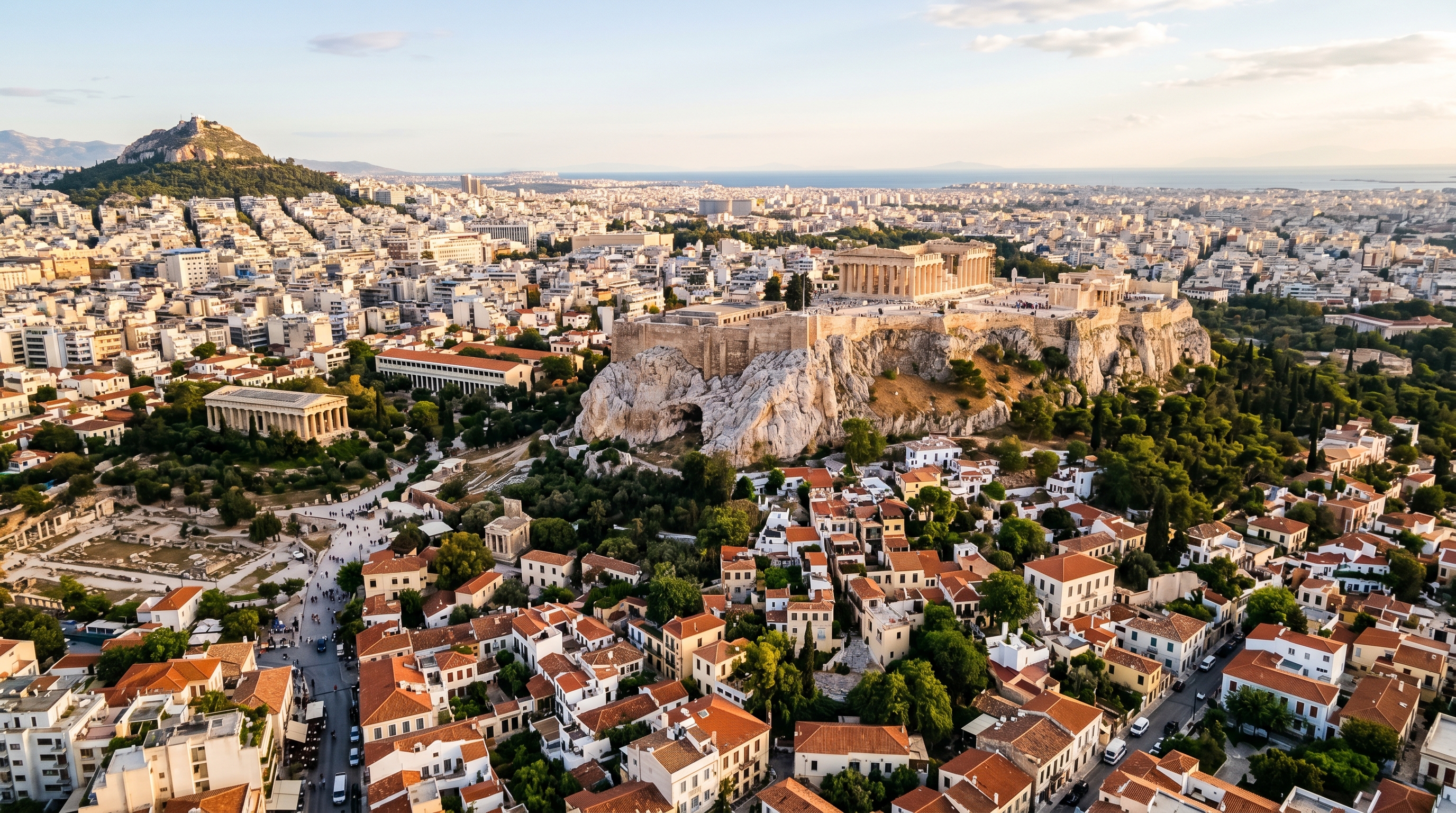
TL;DR: Three days in Athens is the sweet spot for first-time visitors. Day 1 covers the Acropolis, Acropolis Museum, and Plaka. Day 2 hits the National Archaeological Museum, Monastiraki, and Syntagma Square. Day 3 is a day trip to Cape Sounion or a beach day on the Athens Riviera. This guide gives you a realistic hour-by-hour plan with costs, transport tips, and booking advice.
Introduction
Athens is one of those cities that rewards people who plan but punishes people who over-plan. The ancient sites demand a slow pace. The food deserves a long lunch. The neighbourhoods are best explored by getting lost in them.
This 3-day Athens itinerary balances the unmissable with the unexpected. You’ll cover the Acropolis properly, see the best museums, eat well, and still have room to wander.
Three days is the minimum to feel like you’ve actually been to Athens. Five days is ideal. If you only have two, see the note at the end of this guide.
Day 1: The Acropolis, Acropolis Museum, and Ancient Athens
Morning: The Acropolis (8am–10:30am)
Start at the Acropolis as soon as it opens at 8am. This is not a nice-to-have. It’s the single most important thing you can do to have a good visit. By 10am, the first wave of cruise ship groups arrives and the site gets very crowded.
Arriving early gives you quiet pathways, better photographs, and cooler air. Allow 2 to 2.5 hours to see the Parthenon, Erechtheion, Temple of Athena Nike, and the views from the summit. For a much richer experience, book a guided Acropolis tour online, which includes skip-the-line entry and a licensed guide who covers 2,500 years of history in a way that makes the ruins come alive.
Cost: €20 for the standard Acropolis ticket (or €30 for the combined ticket, which covers six ancient sites and is valid for 5 days). Guided tours start from around €35 per person.
For everything you need to know before you go, read our complete Acropolis visitor guide.
Late Morning: Acropolis Museum (11am–1pm)
Walk five minutes east from the Acropolis entrance to the Acropolis Museum (📍 Map). This modern glass building sits directly above ancient ruins and holds the best of what survived from the hilltop, including the original Caryatid statues (five of the six), the Parthenon frieze fragments, and thousands of objects from the Archaic period.
The top floor gallery aligns perfectly with the Parthenon’s orientation, so you’re looking at the temple through glass while studying its sculptures. It’s a genuinely clever piece of architecture.
Cost: €10 entry. Audio guides are available for an extra fee.
Lunch: Plaka (1pm–2:30pm)
Head into Plaka, the oldest continuously inhabited neighbourhood in Athens. It spreads across the north and east slopes of the Acropolis hill. The streets are narrow, shaded, and lined with tavernas.
For a sit-down lunch, look for spots away from the main tourist drag on Adrianou Street. Prices drop and quality rises by one block. A full meal with a carafe of house wine runs €15–25 per person. Look for the handwritten menu boards, which usually mean the kitchen is cooking today’s specials rather than reheating last week’s.
Afternoon: Ancient Agora (2:30pm–4:30pm)
The Ancient Agora (📍 Map) was the civic heart of ancient Athens, the marketplace and meeting ground where Socrates argued philosophy, traders sold goods, and democracy was debated. The Stoa of Attalos (a reconstructed ancient shopping arcade) houses a small museum with everyday objects from classical Athens. The Temple of Hephaestus on the hill above is one of the best-preserved Greek temples anywhere.
The Agora is included in the combined ticket if you bought one at the Acropolis.
Sunset: Filopappou Hill (5:30pm–7pm)
End the day on Filopappou Hill, the forested ridge directly southwest of the Acropolis. The path up is easy and takes about 15 minutes from street level. At the top, you get one of the best views of the Parthenon available, with the hill lit gold in the late afternoon sun. It’s free, quiet, and genuinely beautiful.
Day 1 Total Budget Estimate (per person): €45–65 including entry, lunch, and dinner in Plaka.
Day 2: Museums, Markets, and the Modern City
Morning: National Archaeological Museum (9am–12pm)
Take the Metro from Acropolis station (Line 2, red) to Omonia station, then walk 10 minutes north to the National Archaeological Museum (📍 Map). It’s one of the most important museums in the world for ancient Greek art and history.
Highlights include the Antikythera Mechanism (an ancient astronomical calculator), the gold death masks from Mycenae, the bronze statue of Poseidon, and the Thira (Santorini) frescoes from the Bronze Age. Allow at least 2 to 3 hours. If you run short on time, prioritise the Mycenaean gallery (ground floor, rooms 3–6) and the bronze sculpture hall.
Cost: €12 standard entry (free on the first Sunday of each month from November to March).
Midday: Monastiraki Flea Market (12pm–2pm)
Head back south to Monastiraki, one stop from Omonia on Line 1 (green). The flea market here is the most atmospheric market in Athens, full of vintage clothes, old books, handmade jewellery, and enough tourist kitsch to stock a dozen souvenir shops.
Even if you’re not buying, it’s worth an hour for the energy alone. The square itself has views of the Ancient Agora and Acropolis behind it. Grab a souvlaki from one of the street stalls for around €2.50–3 and eat while you walk.
Afternoon: Syntagma Square and the Changing of the Guard (2:30pm–4pm)
Walk east from Monastiraki along Ermou Street (Athens’ main shopping street) to Syntagma Square, the central plaza in front of the Greek Parliament. The Changing of the Evzone Guard happens at the Tomb of the Unknown Soldier every hour, on the hour. On Sundays at 11am, the full ceremonial change with the entire guard company is worth seeing if your schedule allows.
The Evzones wear traditional uniform: white kilt (foustanella), tasselled shoes, and rifles. The ceremony is slow, precise, and quite unlike anything else in European capital cities.
Evening: Rooftop Dinner (7pm–9pm)
Athens has a concentration of rooftop bars and restaurants that makes the city look better at night than almost anywhere. From Monastiraki to Kolonaki, most high buildings have a rooftop bar with direct Acropolis views.
The Acropolis is lit after dark, and seeing it from a rooftop table over a Greek mezze spread is one of those experiences that stays with you. Budget €30–45 per person for food and drinks at a mid-range rooftop spot.
Day 2 Total Budget Estimate (per person): €60–80 including museum entry, lunch, and dinner.
Day 3: Cape Sounion or the Athens Riviera
Option A: Cape Sounion Day Trip
Cape Sounion (📍 Map) sits on the southern tip of the Attica peninsula, about 70 kilometres from Athens. The clifftop Temple of Poseidon stands 60 metres above the sea and offers some of the most dramatic ancient site views in Greece.
KTEL buses to Sounion leave from the Pedion Areos bus station (near the National Archaeological Museum) roughly every 90 minutes. The journey takes about 90 minutes and costs €6.50 each way. Entry to the site is €8.
Leave Athens by 9am to arrive before the midday heat. There’s a small cafe at the site and several fish tavernas in the village below.
Option B: Athens Riviera and Vouliagmeni Lake
If you’d rather spend the day on the water, the Athens Riviera is a string of beaches along the coast south of the city, accessible by tram from Syntagma. Vouliagmeni Lake is a brackish thermal lake set between limestone cliffs, popular with locals for swimming and relaxing. Entry is around €8–12 depending on the season.
The tram from Syntagma to Vouliagmeni takes around 50 minutes and costs €1.40 with an Ath.ena card (see transport notes below).
Getting Around Athens: The Ath.ena Card
Athens’ public transport system (Metro, tram, and bus) uses a reloadable card called the Ath.ena card, similar to London’s Oyster card. Buy one at any Metro station for €1 and load credit as needed. A single journey is €1.40, and a 24-hour pass is €4.50. It covers Metro, trams, trolleys, and most buses.
The Metro is clean, reliable, and air-conditioned. It’s the easiest way to get between the main tourist areas.
Is 2 Days in Athens Enough?
Two days works if you focus. On day one, do the Acropolis, Acropolis Museum, and Plaka. On day two, do the National Archaeological Museum and Monastiraki. You won’t see everything, but you’ll see the best of it.
For a more complete picture of things to do in Athens, check our guide to the 20 best experiences in the city.
Book Your Acropolis Tour for Day 1
The single best upgrade you can make to this itinerary is booking a guided Acropolis tour for Day 1 morning. You skip the queue, get skip-the-line access, and have a licensed guide explain the history that you’d otherwise miss. It’s the difference between looking at old stones and understanding why people still travel 2,500 years later to see them.
Book a guided Acropolis tour now
Frequently Asked Questions
How many days do you need in Athens?
Three days gives you enough time to cover the main ancient sites, at least one major museum, and explore a few neighbourhoods properly. Five days is ideal if you want day trips and a slower pace. Two days is tight but possible if you focus on the Acropolis and the National Archaeological Museum.
What is the best 3-day Athens itinerary?
The best structure is: Day 1 for the Acropolis, Acropolis Museum, and Plaka; Day 2 for the National Archaeological Museum, Monastiraki, and Syntagma; Day 3 for a day trip to Cape Sounion or a beach day on the Athens Riviera. This balances ancient history, culture, food, and a change of scenery.
Is 2 days in Athens enough?
Two days is enough to see the highlights if you plan carefully. Prioritise the Acropolis on the morning of Day 1, the Acropolis Museum in the afternoon, and the National Archaeological Museum on Day 2. You’ll miss some things but you’ll leave with the core Athens experience.
How do you get around Athens as a tourist?
The Metro is the easiest option for most tourist routes. Buy an Ath.ena card (reloadable, like an Oyster card) at any Metro station for €1 and load credit as needed. A single journey is €1.40. Walking between Plaka, Monastiraki, Syntagma, and the Acropolis area is also very practical since they’re all within 20 to 30 minutes on foot.
What is the best area to stay in Athens?
For first-time visitors, the Monastiraki and Plaka areas put you within walking distance of the Acropolis and the main ancient sites. Kolonaki is the upmarket option if you prefer boutique hotels and quieter streets. Psirri is a good choice for nightlife and street food culture.
Skip the queue at the Acropolis
Book skip-the-line tickets or a guided tour — instant confirmation, free cancellation.
See pricing & availability →Or compare all options on our plan your Acropolis visit guide.