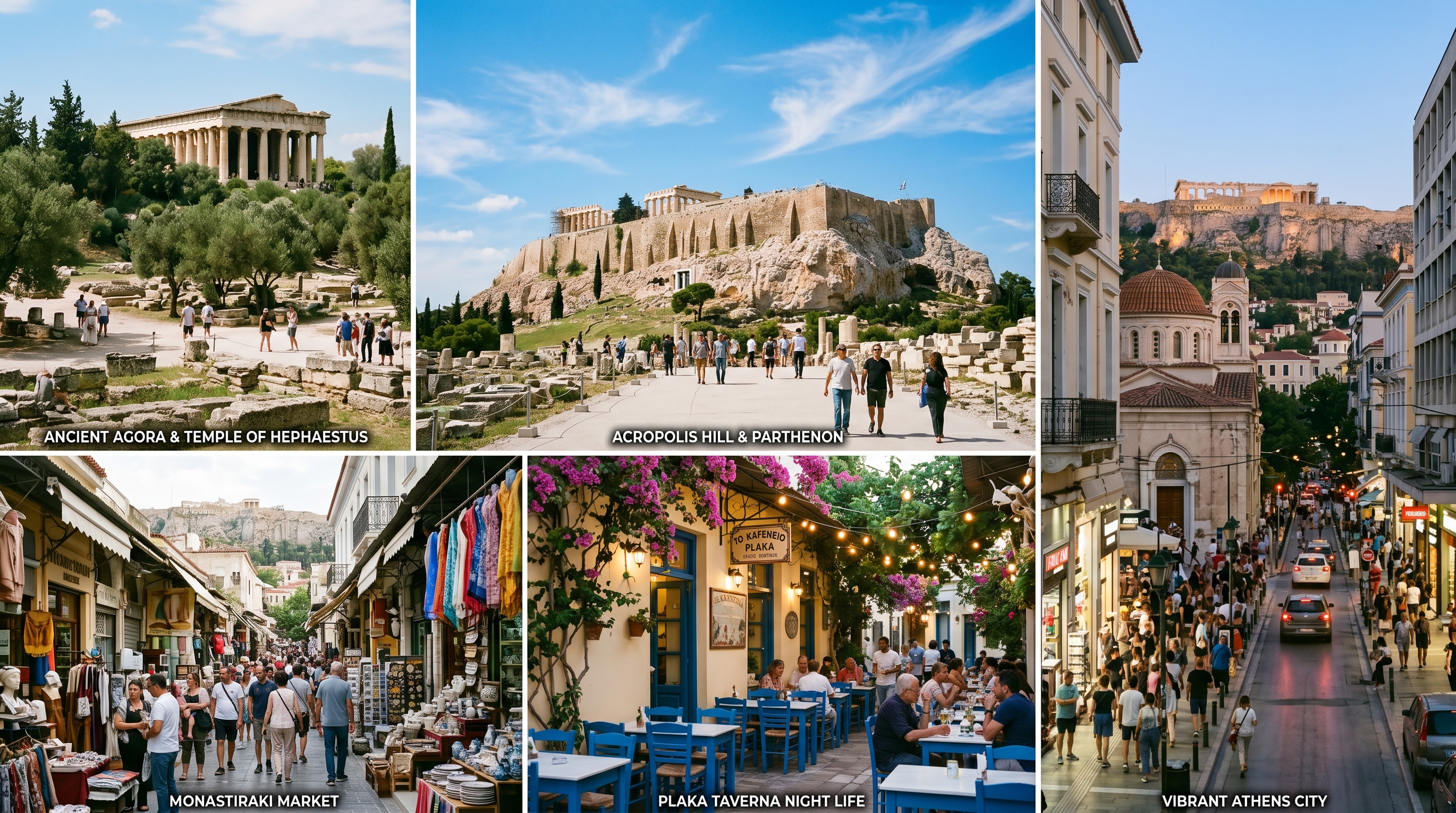
TL;DR: Athens rewards visitors who look beyond the obvious. The Acropolis is the undisputed highlight, but this list covers 20 of the best things to do in Athens in 2026, from ancient ruins and world-class museums to street food, hidden neighbourhoods, and day trips. Ranked by how much visitors actually enjoy them, not just by how famous they are.
Introduction
Athens is one of the oldest continuously inhabited cities in the world, and it shows in every direction you look. Ancient temples sit next to graffiti-covered walls. Byzantine churches appear between coffee shops. The city is messy and contradictory and genuinely exciting.
Knowing what to do in Athens is easy. Knowing what to prioritise with limited time is harder. This list ranks 20 experiences by actual visitor satisfaction and local knowledge, so you spend your time on the things that matter most.
Whether you have two days or two weeks, start here.
The 20 Best Things to Do in Athens
1. Visit the Acropolis and Parthenon
There is no equivalent in Athens, and arguably nothing in Europe, that matches the experience of standing on the Acropolis and looking at the Parthenon up close. Built in 447–438 BC, it’s a near-perfect expression of classical Greek architecture that has influenced buildings from Washington DC to London.
Arrive at 8am when the site opens to avoid crowds and catch the best light. A guided tour makes an enormous difference in understanding what you’re looking at. Book skip-the-line Acropolis tickets in advance, especially in summer.
Insider tip: Walk to the east end of the summit for unobstructed views of the city with almost nobody else around.
For a full planning guide, read our Acropolis visitor guide.
2. Explore the Acropolis Museum
The Acropolis Museum is one of the best-designed museums in Europe. It sits directly below the hill and holds the finest objects ever found on the site, including the original Caryatid statues, the Parthenon frieze, and thousands of sculptures and artefacts from across 3,000 years of occupation.
Entry costs €10. The top-floor gallery faces the Parthenon itself through floor-to-ceiling glass, which creates an extraordinary sense of scale and connection. Allow at least 2 hours.
Insider tip: Go on a Friday evening when the museum stays open until 10pm. The sunset views from the top floor are outstanding.
3. Walk Through the Ancient Agora
The Ancient Agora was the beating heart of classical Athens, where trade, politics, and philosophy all happened in the same open space. Socrates taught here. Athenian democracy was debated here.
The Temple of Hephaestus on the Agora’s western hill is one of the best-preserved ancient temples in Greece. The Stoa of Attalos, a reconstructed two-storey arcade, houses a small but excellent museum with everyday objects from ancient Athens, including coins, pottery, and bronze tools.
Entry is €10 standalone or included in the €30 combined Acropolis ticket.
4. Wander Through Plaka
Plaka is the oldest continuously inhabited neighbourhood in Athens, spreading across the north and east slopes of the Acropolis. Its narrow streets, neoclassical houses, and small churches haven’t changed much in character for centuries.
It’s touristy in places, but genuinely lovely if you get one street back from the main drag. Look for the small Byzantine church of Agios Nikolaos Ragavas tucked into a side alley, or the Tower of the Winds (Aerides), a remarkably preserved Roman-era clock tower.
Insider tip: Come in the early morning before 9am, when the streets are empty and the light is perfect.
5. Visit the National Archaeological Museum
The National Archaeological Museum near Omonia Square is one of the most important collections of ancient Greek art in the world. Highlights include the Antikythera Mechanism (an ancient mechanical astronomical calculator), Mycenaean gold masks, and an entire floor of classical bronzes and sculptures.
Entry is €12. It’s free on the first Sunday of the month from November to March. Crowds are lighter here than at the Acropolis, making it easier to spend time with the objects.
6. Browse Monastiraki Flea Market
The Monastiraki flea market around Plateia Avissynias is at its liveliest on Sunday mornings, when dealers spread vintage furniture, old records, military surplus, jewellery, and handmade goods across the square.
It’s the kind of place where you can find something genuinely unexpected for very little money. Even if you buy nothing, it’s one of the most atmospheric spots in the city.
Metro: Monastiraki station (Lines 1 and 3).
7. Eat Souvlaki and Street Food
Athens is a great street food city. A souvlaki wrap (gyros) from a local pita shop runs €2.50–3.50 and is one of the most satisfying quick meals in Mediterranean Europe.
Beyond souvlaki, look for spanakopita (spinach and feta pie) from bakeries, loukoumades (honey-drizzled doughnuts) from specialist shops, and fresh bougatsa (custard or cheese pastry) for breakfast. Monastiraki and Psirri are the best areas for street food density.
Insider tip: The best souvlaki spots are almost never on the main tourist streets. Ask a hotel or Airbnb host for their local recommendation.
8. Drink at a Rooftop Bar
Athens has a rooftop bar scene that outperforms almost every other European capital for views. The Acropolis is lit after dark and looks extraordinary from a high vantage point across the city.
The Monastiraki and Syntagma areas have the highest concentration of rooftop venues. Prices are reasonable by Western European standards: €10–15 for a cocktail, usually with a direct Parthenon view.
Insider tip: Book a table rather than arriving cold in summer. The best spots fill up by 8pm.
9. Day Trip to Cape Sounion
The Temple of Poseidon at Cape Sounion sits on a cliff 60 metres above the Aegean, about 70 kilometres south of Athens. It’s one of the most dramatic ancient sites in Greece, particularly in the late afternoon when the sun sets over the sea behind the columns.
KTEL buses depart from Pedion Areos bus station roughly every 90 minutes. The journey takes about 90 minutes each way and costs €6.50. Entry to the site is €8. Aim to arrive by mid-morning and stay for the sunset if you can.
10. Swim at the Athens Riviera or Vouliagmeni Lake
The Athens Riviera is a stretch of beaches along the Attica coast, easily reached by tram from Syntagma Square. The water is clean and the tram ride along the coast is scenic.
Vouliagmeni Lake, near the end of the tram line, is a brackish thermal lake between limestone cliffs. Entry is €8–12 depending on the season. Locals come here year-round for a swim and a long lunch at the lakeside tavernas.
11. Explore the Benaki Museum
The Benaki Museum on Koumbari Street is one of Greece’s great private collections, covering Greek culture from prehistory to the 20th century. The jewellery collection alone is worth the visit, particularly the Byzantine goldwork.
Entry is €12. The rooftop cafe has good views of Kolonaki and the Lycabettus hill.
12. Watch the Sunset from Filopappou Hill
Filopappou Hill (the Hill of the Muses) is a forested ridge southwest of the Acropolis with one of the best free views in the city. The 15-minute walk up passes through pine trees and emerges at a hilltop monument with a clear view of the Parthenon.
It’s free, quiet, and one of the most beautiful spots in Athens in the late afternoon. It’s also popular with locals for an evening walk, which means it feels authentic rather than touristy.
13. See the Changing of the Guard at Syntagma Square
The Evzone guards at the Tomb of the Unknown Soldier in Syntagma Square change on the hour, every hour. The ceremony is slow, deliberate, and unusual: the guards wear white foustanella kilts, heavy tasselled shoes (tsarouhia), and carry rifles.
The full ceremonial change with the entire guard company happens every Sunday at 11am and draws a large crowd. It’s free and worth 30 minutes of your time.
14. Shop on Ermou Street and Kolonaki
Ermou Street is Athens’ main pedestrian shopping street, running from Syntagma Square to Monastiraki. It has international chains, Greek fashion brands, and good shoe shops.
Kolonaki, uphill from Syntagma, is the upmarket shopping and dining district. More boutiques, fewer tourists, and significantly better coffee. The neighbourhood sits below Lycabettus Hill and has a distinctly Parisian feel in its cafe culture.
15. Visit Piraeus and the Port
Piraeus is Athens’ port city, about 30 minutes from the city centre on Metro Line 1 (green). Most visitors pass through only to catch a ferry to the islands, but the harbour itself is worth an hour. The Archaeological Museum of Piraeus holds bronze statues found in the harbour and is often overlooked.
If you’re taking a ferry to a Greek island, arriving at Piraeus the evening before and having dinner at one of the seafood restaurants along the marina is a very good way to start an island trip.
16. See Athens Street Art in Psirri
The Psirri neighbourhood, just north of Monastiraki, is Athens’ most concentrated zone for street art and graffiti culture. The murals range from large-scale commissioned works to spontaneous tags and everything in between.
The neighbourhood is also home to some of Athens’ best small bars, live music venues, and late-night restaurants. It starts getting lively after 10pm and runs until very late. A very different Athens from the ancient sites.
17. Run (or Walk) in the Panathenaic Stadium
The Panathenaic Stadium (Kallimarmaro) is the original Olympic stadium, built entirely of white Pentelic marble. It hosted the first modern Olympic Games in 1896 and today serves as a museum and occasional venue.
You can walk on the track, sit in the stands, and visit the small museum inside. Entry is €10 and includes an audio guide. It’s one of the few places in the world where you can genuinely say you walked where the first modern Olympians competed.
18. Hike up Mount Lycabettus
Mount Lycabettus is the highest point in central Athens at 277 metres. You can walk up through pine forests (about 45 minutes from Kolonaki) or take the funicular railway from Plutarchou Street.
At the top, there’s a small whitewashed chapel of Saint George, a cafe, and panoramic views over the entire city. On a clear day you can see the Acropolis, the sea, and the mountains ringing the Attica basin. The best time to go is an hour before sunset.
19. Befriend Athens’ Famous Street Cats
Athens has one of the largest urban cat populations in Europe, and the cats are a genuine part of the city’s character. They sleep on ancient columns, lounge in archaeological sites, and accept attention from tourists with aristocratic indifference.
The Ancient Agora and the area around Monastiraki are particularly well-populated. Several local organisations care for the colony cats, and visitors are welcome to interact with them. It sounds like a minor thing but ends up being a surprisingly memorable part of an Athens trip for many visitors.
20. Take a Greek Cooking Class
Athens has a growing food tourism scene, and a Greek cooking class is one of the better ways to spend a rainy afternoon or a slower travel day. Most classes cover staples: tzatziki, moussaka, spanakopita, and fresh baklava.
Several operators in Monastiraki and Plaka run half-day classes starting at around €65–85 per person, including a market visit to buy ingredients. You leave with recipes, a full stomach, and actual skills you can use at home.
Plan Your Athens Trip
For a day-by-day Athens plan that fits these 20 activities into a practical schedule, read our 3-day Athens itinerary. If you’re ready to book the Acropolis, the single most important stop, secure your skip-the-line ticket now before prices or availability change.
Frequently Asked Questions
What are the top things to do in Athens?
The top three are the Acropolis (including the Parthenon), the Acropolis Museum, and the National Archaeological Museum. Beyond the ancient sites, walking through Plaka, eating street food in Monastiraki, and watching the sunset from Filopappou Hill round out the essential Athens experience.
What is Athens most famous for?
Athens is most famous for the Acropolis and the Parthenon, the birthplace of democracy, and its role as the cultural centre of the ancient world. It’s also the city where Western philosophy (Socrates, Plato, Aristotle) developed and where the first modern Olympic Games were held in 1896.
Is Athens worth visiting?
Yes, Athens is absolutely worth visiting. It’s one of the most historically significant cities in the world and still feels alive and modern. The food is excellent, the cost of living is lower than most Western European capitals, and the concentration of world-class ancient sites is unmatched outside of Rome.
How many days do you need to see Athens properly?
Three days covers the main highlights at a comfortable pace. Five days gives you room for day trips to Cape Sounion or Delphi, slower museum visits, and more time to explore neighbourhoods like Psirri and Kolonaki. Two days works for a quick visit if you focus on the Acropolis and one major museum.
When is the best time to visit Athens?
April, May, September, and October are the best months: warm enough for outdoor sites and beaches, but without the intense July–August heat and crowds. July and August are peak season and very hot (often above 35°C). Winter (November to March) is quiet, cheaper, and ideal for museum-focused visits, though some outdoor sites have reduced hours.
Skip the queue at the Acropolis
Book skip-the-line tickets or a guided tour — instant confirmation, free cancellation.
See pricing & availability →Or compare all options on our plan your Acropolis visit guide.