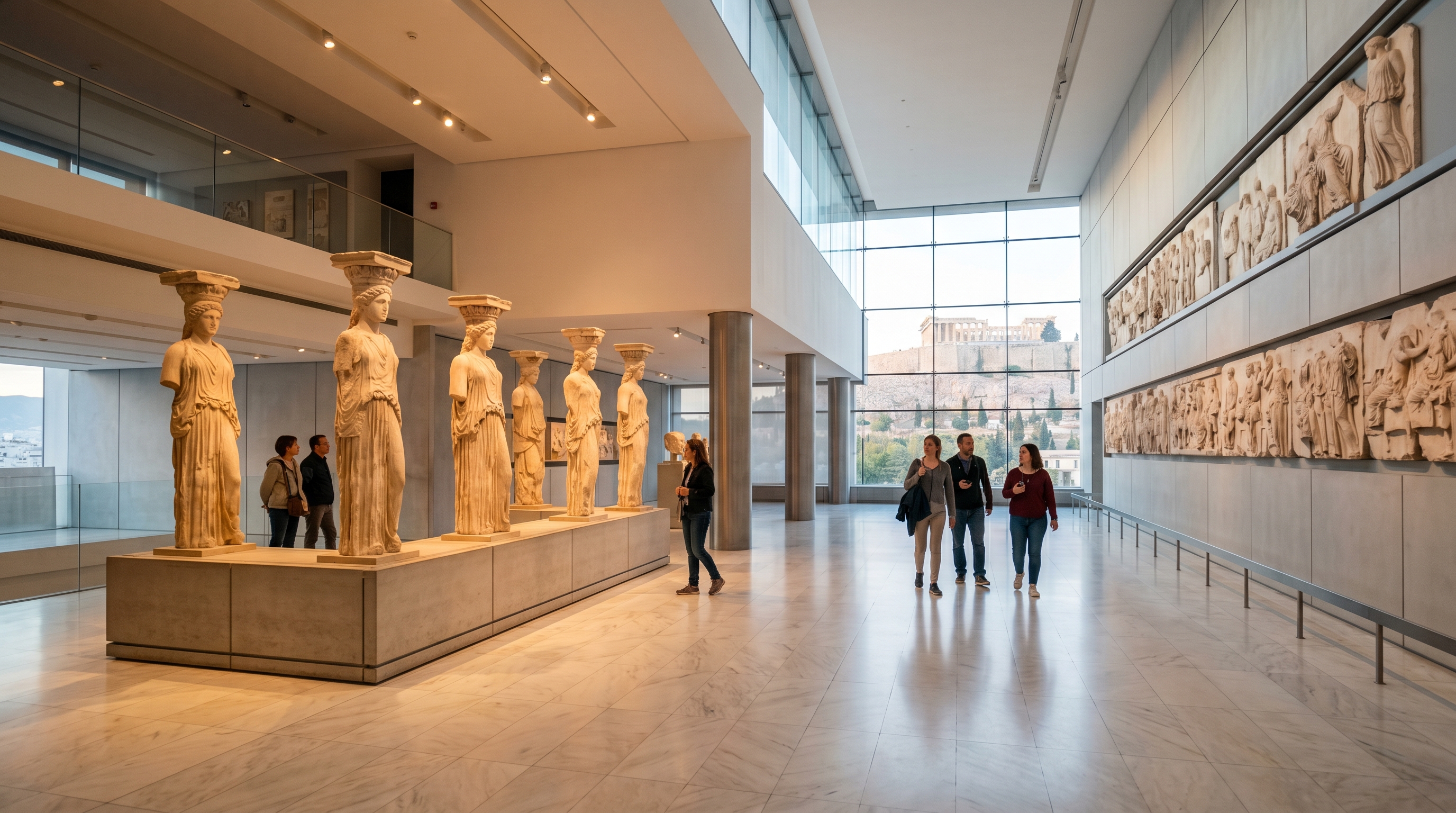
TL;DR: The Acropolis Museum is a separate attraction from the Acropolis hill, with its own ticket priced at €10 (reduced €5). It opens Tuesday through Sunday and is closed on Mondays in winter. The museum holds the best-preserved sculptures from the Acropolis, including original Caryatids and the stunning Parthenon Gallery. Most visitors should visit the museum first for context, then head to the hill in the afternoon.
The Acropolis Museum (📍 Google Maps) opened in 2009, and it changed everything about how visitors experience the Acropolis. Before it existed, most of the surviving sculptures were either in storage, scattered across foreign collections, or deteriorating outdoors. Now, the best pieces are gathered in one world-class building, explained in full, and displayed with the Acropolis hill itself visible through the floor-to-ceiling windows above.
This guide covers everything you need to plan your museum visit: tickets, opening hours, what to see, and the smartest way to combine it with your Acropolis entry.
Is the Acropolis Museum Included in the Acropolis Ticket?
The Acropolis Museum is not included in the standard Acropolis ticket or the combined ticket. It is a completely separate attraction with its own admission fee.
Many visitors assume the two are bundled together because they’re so closely linked. They’re not. You need to buy a separate museum ticket on the day, or book combined tours here that cover both in a single reservation.
If you’re planning to do both, factor in at least half a day for the museum alone. It is not a quick stop.
Acropolis Museum Ticket Prices
| Ticket Type | Price |
|---|---|
| Adult (full price) | €10 |
| Reduced (students, seniors) | €5 |
| Children under 18 | Free |
| Free admission | First Sunday Nov to Mar, selected national days |
The reduced ticket applies to EU students with valid ID, seniors over 65 from EU countries, and certain other categories. It’s worth having your ID or student card ready when you arrive.
Free admission days at the museum generally align with the same dates as the Acropolis hill, including the first Sunday of each month from November through March, and international heritage days such as May 18 (International Museums Day).
Acropolis Museum Opening Hours
The museum keeps different hours in summer and winter, so check ahead before you go.
Summer Hours (April to October)
| Day | Hours |
|---|---|
| Monday | 8:00am to 4:00pm |
| Tuesday to Thursday | 8:00am to 8:00pm |
| Friday | 8:00am to 10:00pm |
| Saturday and Sunday | 8:00am to 8:00pm |
Winter Hours (November to March)
| Day | Hours |
|---|---|
| Monday | Closed |
| Tuesday to Sunday | 9:00am to 5:00pm |
Important: The museum is closed on Mondays in winter. If you’re visiting Athens between November and March, plan accordingly and do not rely on a Monday museum visit.
The Friday late opening until 10pm in summer is a well-kept secret. The museum is significantly quieter in the evening, the lighting is atmospheric, and the Parthenon Gallery at night is genuinely spectacular.
How to Get to the Acropolis Museum
The museum is located on Dionysiou Areopagitou street in the Makrygianni neighbourhood, directly below the south slope of the Acropolis hill.
From the main Acropolis entrance (Propylaea gate), the museum is about a 15-minute walk downhill. The walk takes you along the southern path, past the Theatre of Dionysus and the Odeon of Herodes Atticus. It’s a pleasant route with good views back up at the hill.
By Metro: Take the Metro Line 2 (Red Line) to Acropolis station. The museum entrance is a 3-minute walk from the exit.
By Foot from Monastiraki: Walk south along the pedestrian street Apostolou Pavlou. Allow 15 to 20 minutes from Monastiraki square.
There is no dedicated car park at the museum. If you’re driving, street parking in the area is limited. The metro is the easiest option.
What to See at the Acropolis Museum: Top Highlights
The museum has three main floors, each covering a different period of the Acropolis’s history. Allow at least two to three hours for a thorough visit.
The Ground Floor: Archaic Athens
The ground floor covers the period before the Parthenon was built. You’ll find:
- Archaic kouroi and korai: These are the stiff, smiling stone figures carved in the 7th and 6th centuries BC. The so-called “Archaic Smile” on their faces is not happiness but a stylistic convention, and seeing a row of them in person is quietly haunting.
- Moschophoros (Calf-Bearer): A man carrying a calf, dating from around 570 BC. One of the most recognizable works of Archaic Greek sculpture.
- Foundational ruins: The ground floor is built on a glass walkway above the actual archaeological excavations beneath the museum. You can look down through the floor and see ancient Athenian streets, houses, and workshops from the classical and later periods.
The First Floor: The Slopes of the Acropolis
The first floor displays objects found on the slopes of the hill rather than the summit. It includes votives, pottery, and smaller sculptures that give a sense of everyday religious life in ancient Athens.
The Caryatid Hall: Don’t Miss This
On the way to the upper floors, you pass the Caryatid Hall, which houses five of the six original Caryatids from the Erechtheion. These are the famous female figures who served as columns on the Erechtheion’s porch.
Five are here. The sixth is in the British Museum in London. The museum has placed a cast of the missing figure in the empty space, and it’s an oddly powerful statement about the Elgin Marbles debate. Standing next to the originals, which still show traces of paint and extraordinary detail, you understand immediately why Greece wants the London piece back.
To learn more about the history of these sculptures and the broader story of the hill, see our guide to the history of the Acropolis.
The Top Floor: The Parthenon Gallery
This is the reason most people come to the museum. The Parthenon Gallery occupies the entire top floor, a glass-enclosed hall with the actual Acropolis visible through the windows above. The floor plan mirrors the exact dimensions of the Parthenon itself.
Around the walls runs the surviving Parthenon frieze, with the Athens-held originals (about 50 metres) displayed alongside plaster casts of the London sections (about 80 metres). The effect is deliberate: you can see the full composition for the first time since 1801, even if part of it is in reproduction. The difference in colour between the original honey-yellow marble and the bright white casts is intentional. It is meant to make the argument visual.
The frieze depicts the Panathenaic procession, a festival held every four years in honor of Athena. Starting from both ends and moving toward the center, it shows horsemen, musicians, sacrificial animals, and gods assembled to receive Athena’s new robe.
The Best Way to Visit Both the Acropolis and the Museum
Most experienced visitors recommend visiting the museum first, then the hill. Here’s why:
- Context: The museum explains what you’re looking at before you see the real thing. Arriving at the Parthenon having just seen the frieze in detail gives the ruins an entirely different meaning.
- Air conditioning: The museum is fully air-conditioned. In summer, starting your day here before heading into the heat of the hill makes the experience far more comfortable.
- Crowd management: Opening your day at the museum (which opens at 8am in summer) and then walking up the hill around 11am or noon works well in shoulder season. In peak summer, you’d want to reverse this and hit the hill at 8am, then cool off in the museum after.
For a fully guided experience that covers both sites, book a combined Acropolis and museum tour now. These tours typically run 4 to 5 hours and include a licensed guide, skip-the-line access to the hill, and museum admission.
For more on pricing and ticketing for the hill itself, see our complete guide to Acropolis tickets.
Practical Tips Before You Go
- Bag check: Large bags must be checked in at the entrance. Lockers are free and available near the main door.
- Photography: Photography is allowed throughout the museum. No flash and no tripods.
- Café and restaurant: The museum has a café on the ground floor and a rooftop restaurant with views of the Acropolis. The restaurant is popular for dinner.
- Accessibility: The museum is fully accessible. Lifts serve all floors and there are no steps at the main entrance.
- Audio guide: Available at the desk for a small additional fee. Worth it if you’re visiting without a guide.
- Shop: The museum shop has a good selection of books, prints, and quality reproductions. Better value than most tourist shops in Athens.
Frequently Asked Questions
How much are Acropolis Museum tickets?
Adult tickets cost €10. Reduced tickets (for EU students and seniors over 65) cost €5. Children under 18 enter free. Free admission is available on the first Sunday of every month from November to March and on several international heritage days throughout the year.
Is the Acropolis Museum included in the Acropolis ticket?
No. The Acropolis Museum is a completely separate attraction with its own ticket. Neither the standard Acropolis ticket (€20) nor the combined ticket (€30) includes museum admission. You need to buy a separate museum ticket.
What are the Acropolis Museum opening hours?
In summer (April to October), the museum opens Tuesday to Sunday from 8am to 8pm, with late opening until 10pm on Fridays. Monday hours are 8am to 4pm. In winter (November to March), the museum is closed on Mondays. Tuesday to Sunday hours are 9am to 5pm.
What is the best way to visit both the Acropolis and the Museum?
In summer, visit the Acropolis at 8am when it opens to beat the heat and crowds, then head to the museum mid-morning for air-conditioned recovery and context. In shoulder season, visit the museum first thing to understand the history, then walk up to the hill in the afternoon. Allow at least a full day for both.
What are the must-see exhibits at the Acropolis Museum?
The top three are: the Caryatid Hall (five original Erechtheion caryatids with a cast of the missing sixth), the Parthenon Gallery on the top floor (the surviving frieze with casts of the London sections), and the Archaic Smile sculptures on the ground floor, including the Moschophoros (Calf-Bearer) from around 570 BC.
Skip the queue at the Acropolis
Book skip-the-line tickets or a guided tour — instant confirmation, free cancellation.
See pricing & availability →Or compare all options on our Acropolis skip-the-line tickets guide.